
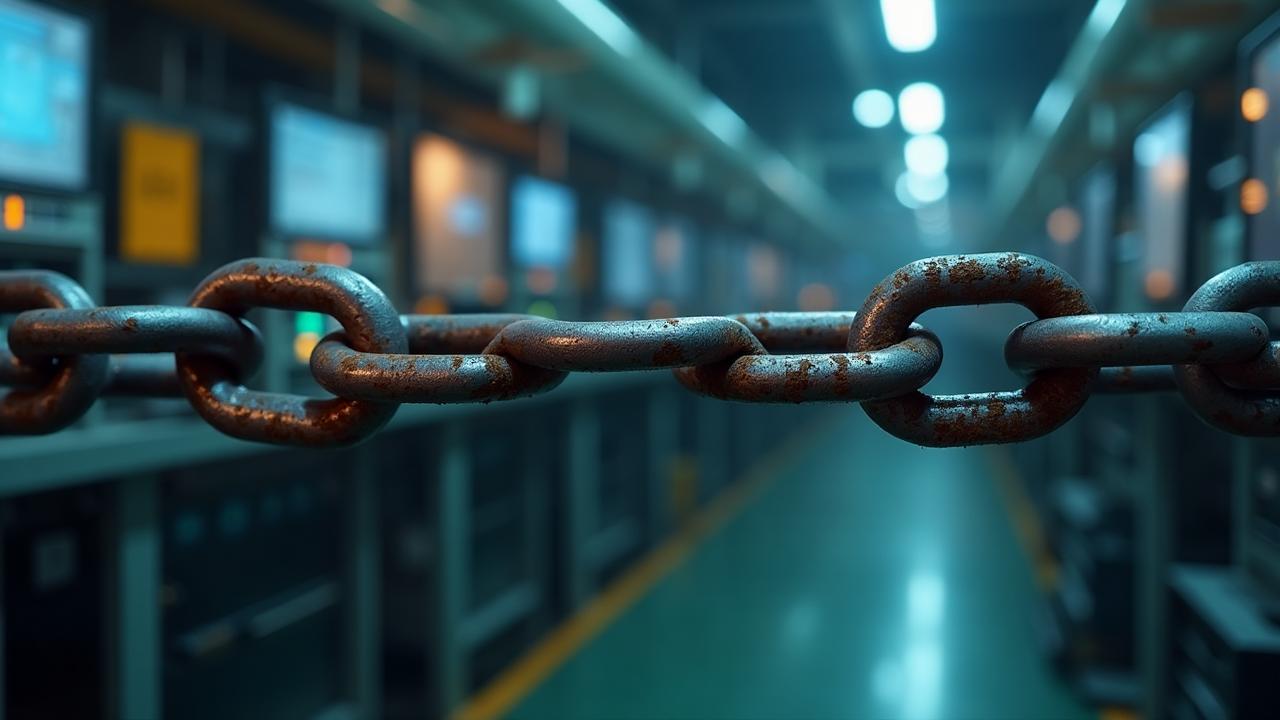
We all know the saying: a chain is only as strong as its weakest link. In manufacturing and production systems, this is a daily reality. Bottlenecks set the pace. No matter how optimized the rest of the process may be, the system is limited by its constraint.
Theory of Constraints (TOC) offers a method to address this. It helps identify the constraint, focus the entire system around it, and improve it. Once the constraint is elevated, a new one emerges. The process starts again. This continuous cycle allows a system to move closer to its full throughput potential.
The turning point: AI pattern recognition
With the rise of AI and IoT technologies, we are entering a new phase of operational improvement. For the first time, we can use real-time data and pattern recognition to identify and manage constraints with speed and precision. AI will not fundamentally change every step of the TOC process, but it creates significant leverage in the five focusing steps, where pattern recognition is essential.
In Step 1: Identify the constraint, AI models can rapidly analyze large volumes of process data to detect where the system is truly limited. These tools can surface hidden bottlenecks using cycle time, lead time, and other data from industrial operations. These are datasets that take significant time for humans to synthesize on their own.
In Step 3: Subordinate everything to the constraint, AI can help industrial engineering teams design new operating plans. By simulating scenarios and optimizing around the constraint, AI systems can propose more effective ways to sequence work, allocate labor, and reconfigure processes. This enhances the role of industrial engineers and supports more responsive, data-driven decision-making.
For Steps 2 and 4, it is less clear how AI can supercharge the process. More likely than not, human creativity will still lead the way in these areas. However, AI agents can assist operators by helping run the entire TOC cycle as a continuous process. Instead of being a one-time initiative, TOC becomes a living system that constantly adjusts based on what is happening on the shop floor.
This vision only works with reliable data. AI systems need more than raw process values. They require metadata that provides context, such as time stamps, machine states, human inputs, and shift conditions. Data integrity becomes the foundation for effective, constraint-aware AI systems.
Industry adoption
Some industries are better positioned to adopt AI-powered TOC sooner than others.
Continuous process industries such as chemicals and automotive are likely to move first. These sectors already rely on automation and have cleaner, more structured process data. That gives them an advantage when it comes to deploying AI systems.
Most Discrete manufacturing sectors like aerospace will follow more gradually. These environments still rely heavily on human labor, and variability is higher. Data tends to be messier. In the short term, this makes it harder to apply AI for constraint management at scale.
A powerful combination
Neither TOC nor industrial engineering will be replaced by AI. Rather, these disciplines will be amplified by it. With the right data foundation, the method becomes more dynamic, responsive, and scalable. Constraint management shifts from a static planning exercise to a real-time operational capability.
This marks the beginning of a new era in operational excellence.